Unmanned and Hybrid Self Storage: How Software Makes It Possible
November 17, 2026 | Team StoRegister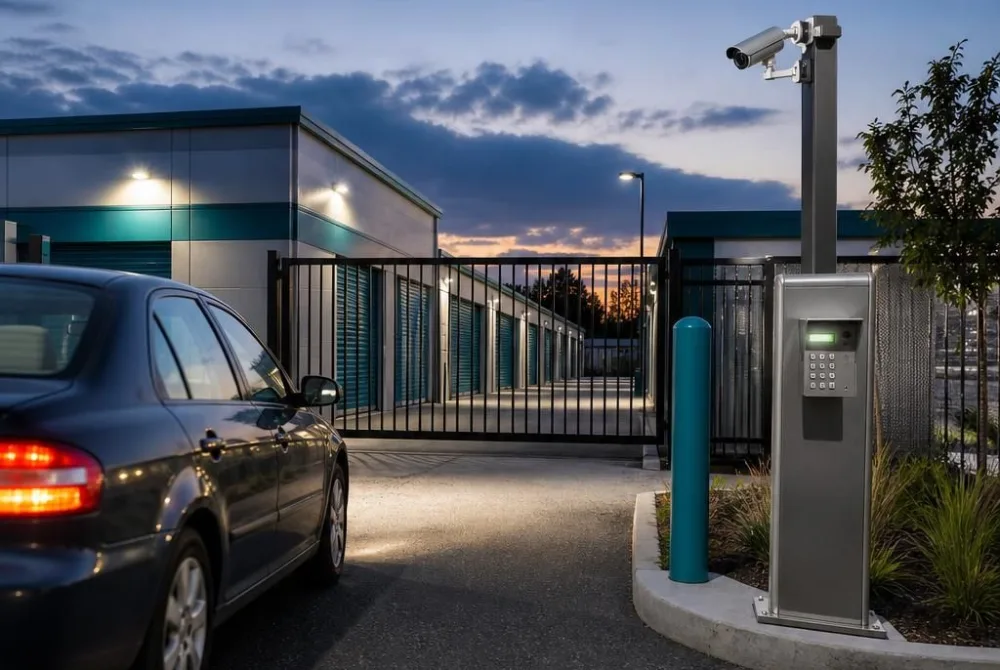
A growing number of storage facilities now run with little or no staff on site for much of the day. Some are fully unmanned. Others use a hybrid model, with staff available at certain times and customers serving themselves the rest of the time.
This isn't about removing the human side of the business. It's about letting technology handle routine tasks so people can focus where they add the most value. Here's how unmanned and hybrid self storage works, and what software makes it possible.
What do unmanned and hybrid mean?
Unmanned self storage means customers can find, book, pay for and access their unit without any staff on site. Support is usually provided remotely by phone, chat or email.
Hybrid self storage combines both approaches. Staff may be on site for a few hours a day or a few days a week, while customers can still book and access their units at other times.
Many operators start hybrid and move further towards remote management as they gain confidence.
Why operators are choosing these models
- Lower operating costs, especially for smaller or rural sites.
- Longer effective opening hours, because customers can book and visit at any time within your access hours.
- Easier expansion, since new sites don't each need full-time staff.
- Customer preference, as many people are happy to self-serve if the process is simple.
The building blocks of remote operation
To run a site without permanent staff, each step of the customer journey needs to work on its own.
1. Online booking
Customers must be able to see availability, choose a unit and reserve it online. A storage calculator helps them pick the right size without asking anyone.
2. Digital agreements
Rental agreements are signed online with e-signature and stored securely. No paper, no office visit.
3. Online payments
The first payment is taken during booking, and recurring billing runs automatically. Customers can update card details themselves.
4. Keyless access
Gate and unit access are linked to the tenant's account. Customers receive access details as soon as their rental is complete and can open the gate or unit with a code or their phone.
5. Remote monitoring and management
Operators need to see what's happening on site: unit status, access activity, overdue accounts and incidents. A clear dashboard, accessible from anywhere, is essential.
6. Easy support
Even self-serving customers sometimes need help. Clear contact options, quick responses and well-written instructions make a big difference.
Why everything should be in one system
Remote operation depends on information flowing automatically. When a customer books, the unit status should update, the agreement should be created, payment should be taken and access should be granted, all without anyone stepping in.
If bookings, payments and access live in separate systems, someone has to connect them by hand, which defeats the purpose. An all-in-one platform like StoRegister, with bookings, e-sign, invoices, payments and unit access in one place, makes this flow natural.
Keeping the human touch
Running a site with fewer staff doesn't mean being distant. In fact, removing routine admin often lets your team spend more quality time with customers who need help, whether that's advising a business on storage options or helping someone through a difficult move.
A branded tenant app and clear, friendly communication keep customers connected to your business even when nobody is on site.
Security considerations
Unstaffed sites need strong security: good lighting, cameras, secure fencing and reliable access control. Linking access to account status means only paying tenants can enter, and every visit is recorded.
Make sure your access rules are clear in your rental agreement and that customers know how to get help if something goes wrong.
Is your site ready?
Ask yourself:
- Can customers book and pay online today?
- Are agreements signed digitally?
- Is access linked to your software?
- Can you see site activity remotely?
- Do customers know how to contact you quickly?
If you can answer yes to most of these, you're already close to running a hybrid site.
Measuring success after the switch
After moving to a hybrid or unmanned model, track a few key measures to make sure it's working. Watch the share of bookings completed online, the time taken to respond to customer questions, overdue accounts and customer reviews. Also note how staff time is being used, and whether it has shifted from routine admin to customer service and site improvement.
If online completion is low, look for steps in the booking flow that confuse customers. If questions increase, improve your instructions or move-in guide. Small adjustments in the first few months make remote operation smoother for customers and your team alike. Share the results with your team so they can see the benefit of the change and suggest further improvements.
Useful resources: for wider industry guidance, see ENISA, the EU Agency for Cybersecurity.
Frequently asked questions
Do customers accept unmanned storage?
Many do, especially when booking is simple and access is reliable. Clear instructions and quick support help build trust.
Can I switch an existing staffed site to hybrid?
Yes. Most operators move gradually, first adding online booking and digital agreements, then keyless access.
What happens if something goes wrong on site?
Have a clear process for remote support and emergencies, and make your contact details easy to find.
Final thoughts
Unmanned and hybrid self storage is becoming a practical choice for many operators. With the right software connecting bookings, agreements, payments and access, a site can run smoothly with fewer staff while customers enjoy more flexibility.
Book a free StoRegister demo to see how remote and hybrid facilities are managed in one secure system.
ALL in. ALL yours.
StoRegister is secure self-storage software with every feature included: bookings, e-sign, invoices, payments, unit access and AI Genie. Book a free demo.